
English 
+86-157-6313-9515
lina@hezongmaterials.com
lina@hezongmaterials.com
26 Jiashan Road, Chucun Town, Weihai City, Shandong Province, China


| Quantity: | |
|---|---|


Core Advantage
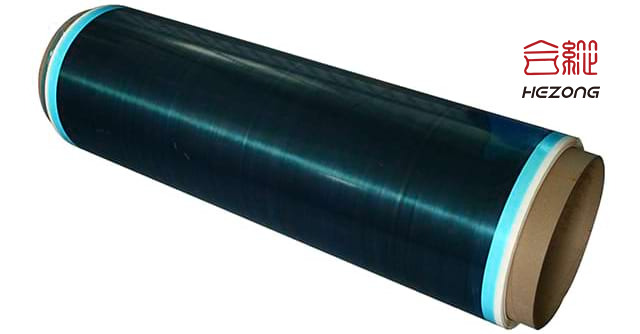
Outstanding cost performance: The process is mature and the mass production cost is controllable. It is currently the carbon fiber prepreg material category with the highest market application share.
Wide adaptability: Supports various carbon fiber forms such as unidirectional, plain weave, and twill weave, which can meet the molding requirements of different structural components.
Balanced performance: It features tensile strength, bending resistance and fatigue resistance, and has a low curing shrinkage rate (≤1%), making the components less prone to deformation after molding.
Complete certification: Can meet multiple industry standards such as ISO 9001, and adapt to compliance requirements in multiple fields.
Product Application
Aerospace field: Aircraft secondary load-bearing structural components (cabin doors, wing ribs), satellite brackets, unmanned aerial vehicle fuselages;
Wind power field: Main beams and root reinforcement layers of wind turbine blades, suitable for offshore/onshore wind power equipment;
Automotive field: Lightweight components such as body structural parts, drive shafts, and engine hoods;
Sports equipment: high-end bicycle racks, badminton rackets, golf clubs, skis;
Construction field: Reinforcement and strengthening strips for Bridges, tunnels, and ancient buildings.
Technical Parameters
| Indicator Category | Core Parameter Range |
|---|---|
| Matrix Resin | Bisphenol A Type / Epoxy Resin / Cycloaliphatic Epoxy Resin |
| Fiber Specification | 3K/6K/12K/24K/48K (Unidirectional / Woven Fabric) |
| Surface Density | 150–400 gsm |
| Resin Content | 28%–35% (Customizable) |
| Curing Process | Medium-temperature curing (80–120°C) / High-temperature curing (120–180°C), Curing time: 60–120 min |
| Mechanical Properties | Tensile strength ≥ 300 MPa, Flexural modulus ≥ 180 GPa, Elongation at break ≥ 1.5% |
| Heat Resistance | Long-term service temperature: 80–120°C, Short-term resistance up to 150°C |
| Storage Conditions | Store at -18°C, Shelf life: 6–12 months (Use within 7 days under normal temperature) |
FAQ
1. What is the minimum order quantity (MOQ) for this product?
The standard MOQ is 500 square meters. For customized specifications (special resin content/fiber morphology), the MOQ can be negotiated to 300 square meters. Free sample application is supported (sample specifications 1-2 square meters).
2. Will storage conditions not reaching -18 ℃ affect product performance?
If stored in an environment of 0-5℃ for a short period (≤3 days), there will be no significant performance degradation. If stored at room temperature for more than 7 days, the resin will cure prematurely, resulting in a decline of over 30% in the mechanical properties of the formed components. It is recommended to store strictly in accordance with the refrigeration requirements.
3. Is it supported to customize the curing process parameters?
The curing temperature (60-180℃) and time can be adjusted according to the customer's molding equipment.


