
English 
+86-157-6313-9515
lina@hezongmaterials.com
lina@hezongmaterials.com
26 Jiashan Road, Chucun Town, Weihai City, Shandong Province, China


Views: 0 Author: HeZong Publish Time: 2026-06-05 Origin: WHHZ


In industries such as aerospace, industrial automation, drones, and new energy equipment, the trade-off between weight reduction and strength has always been a core challenge for engineers. Traditional metal materials – either too heavy or insufficiently durable under specific operating conditions. The emergence of Carbon Fiber Reinforced Polymer (CFRP) fills this gap perfectly.
As a high-performance structural component, carbon fiber tubes offer extremely low density (1.5–1.7 g/cm³), ultra-high tensile strength (up to 3000–5000 MPa), excellent specific stiffness, and outstanding corrosion resistance. They are being increasingly adopted by B-side procurement decision‑makers in design and material selection. Whether for drone arms, robotic arm structures, photovoltaic cleaning telescopic poles, medical device supports, or precision instrument brackets, carbon fiber tubes significantly reduce overall equipment weight without compromising structural strength, thereby improving performance and endurance.
As a high‑tech enterprise integrating R&D, production, and sales of carbon fiber products, Hezong New Material Technology Co., Ltd. (HEZONG NEW MATERIAL TECHNOLOGY CO.,LTD.) has focused for many years on the development and production of carbon fiber tubes, carbon fiber telescopic poles, carbon fiber cleaning poles, carbon fiber plates, and custom‑shaped parts. With full control over the entire process from raw prepreg to finished products, we are committed to providing professional, stable, and customizable carbon fiber solutions to global customers.
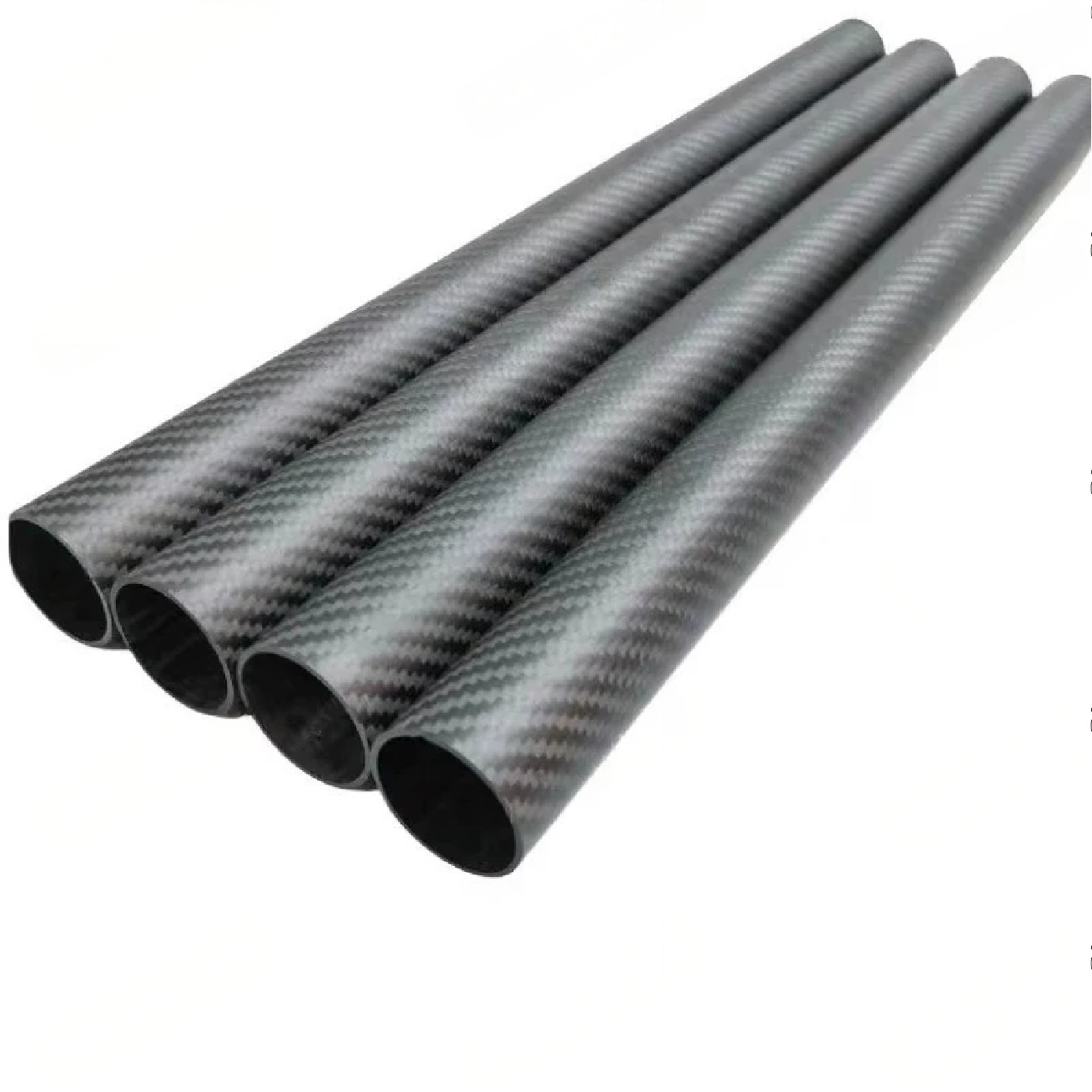
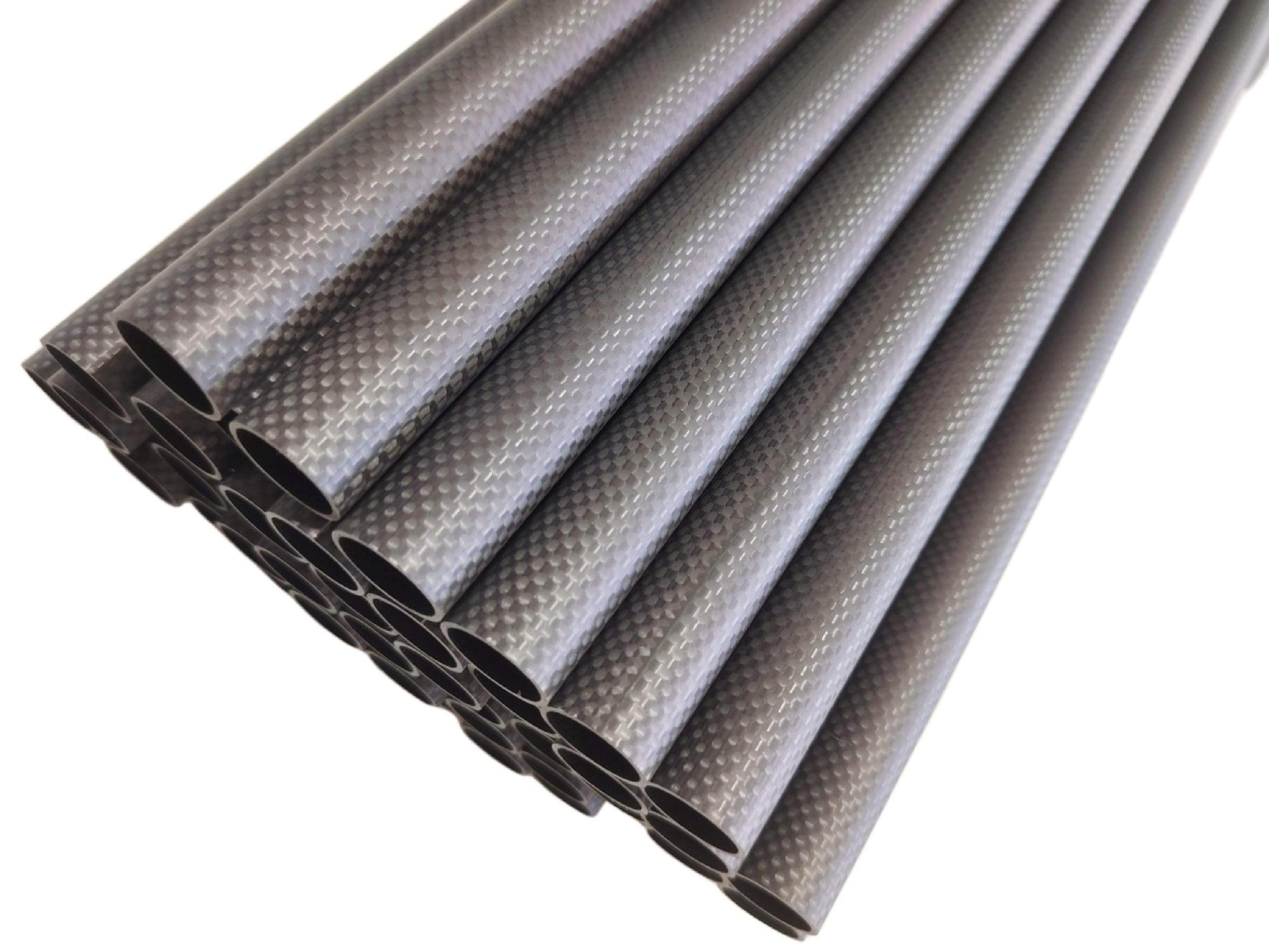
A carbon fiber tube is a hollow cylindrical structural component made of carbon fiber reinforced polymer. The manufacturing process combines continuous carbon fiber filaments with an epoxy resin matrix, endowing the final product with both the high strength of the fibers and the corrosion and aging resistance of the resin matrix.
Depending on the manufacturing process, the mechanical properties and surface appearance of carbon fiber tubes can vary significantly. Currently, the most recognized process for high‑end applications is the roll‑wrapped method. This process uses prepreg wrapped around a precision mandrel according to a predetermined layup sequence, followed by high‑temperature curing. This method allows flexible adjustment of fiber orientation angles (0°, ±45°, 90°), enabling the tube to exhibit balanced mechanical performance under axial tension, bending, and torsional loads.
From a global market perspective, the carbon fiber telescopic tube segment was valued at approximately USD 205.44 million in 2025, is projected to reach USD 226.16 million in 2026, and is expected to grow to USD 366.19 million by 2032 at a CAGR of 8.60%. Meanwhile, the global carbon fiber UAV market reached approximately USD 4.32 billion in 2025, expanding at a CAGR of 8.40%. This rapid growth reflects the broader manufacturing trend toward lightweighting and high performance.
For procurement engineers and product designers, a professional choice is built on a clear understanding of specifications. Below we detail the core product knowledge from five dimensions: fiber grade, resin system, layup design, dimensions & tolerances, and surface finish.
The mechanical performance of a carbon fiber tube depends primarily on the grade of the carbon fiber filament. Mainstream specifications include:
| Fiber Grade | Tensile Strength | Tensile Modulus | Typical Applications |
| T300 | ≈3500 MPa | ≈230 GPa | Cost‑effective choice. Suitable for industrial structural parts, robot arms, cleaning poles, and applications with moderate strength requirements. |
| T700 | ≈4900 MPa | ≈230–240 GPa | Intermediate‑high strength grade. About 40% stronger than T300. Ideal for drone arms, competition‑grade equipment, and aircraft models demanding higher strength‑to‑weight ratios. |
| T800 | ≈5500 MPa | ≈294 GPa | High strength & high modulus grade. Mainly used in aerospace, high‑end racing, and professional industrial robots for extreme performance. |
Custom selection advice: T300 suits budget‑sensitive moderate‑strength needs; T700 is most widely used in drones and industrial robotics; T800 is reserved for ultra‑lightweight, high‑strength scenarios. All three grades are available, and hybrid layups (e.g., T700 inner layers for strength and T300 outer layers for cost optimization) are supported.
The performance of carbon fiber tubes depends not only on the fiber but also on the resin matrix. Hezong New Material uses a high‑temperature curing epoxy resin system featuring:
Glass transition temperature (Tg): 120°C–150°C, long‑term service temperature range -40°C to +100°C
Excellent moisture and chemical resistance suitable for harsh environments like humidity and salt spray
High fiber‑matrix interfacial bond strength – low risk of delamination
Low internal stress after high‑temperature curing ensuring long‑term dimensional stability
A key uniqueness of carbon fiber composites is their designability. A carbon fiber tube is not a single‑direction layup but consists of multiple prepreg layers stacked at specific angles:
[0°] layers: Primarily bear axial tension and compression, providing longitudinal stiffness and strength
[±45°] layers: Primarily bear torsion and shear loads, while improving bending stability
[90°] layers: Mainly resist hoop stresses (from tube clamps, threaded connections) and prevent axial splitting
Common layup schemes:
| Layup Scheme | Performance Characteristics | Typical Applications |
| All 0° | Highest axial stiffness | Telescopic poles, support columns |
| Sandwich (0/±45/0) | Balanced axial & torsional performance | Drone arms, robot joints |
| Symmetric balanced (0/±45/90)s | Isotropic in‑plane performance | General structural parts |
Customers can work with our engineers to design the optimal layup based on actual loading conditions.
Carbon fiber tube specifications are typically expressed as Outer Diameter (OD) × Wall Thickness (WT) × Length (L), e.g., OD20×WT1.5×1000 mm. Hezong New Material’s standard production capabilities:
| Items | Details |
| Outer Diameter | 5 mm – 150 mm (larger sizes available on request) |
Wall Thickness | 0.5 mm – 10 mm (multi‑layer stacking available) |
Length | Up to 2500 mm per single piece (longer by splicing or custom tooling) |
OD Tolerance | ±0.1 mm (high‑precision ±0.05 mm available) |
ID Tolerance | ±0.1 mm |
Length Tolerance | ±1 mm, tighter cutting available per customer request |
Straightness | ≤0.5 mm/1000 mm (roll‑wrapped process achieves higher straightness) |
The surface of carbon fiber tubes affects not only industrial design aesthetics but also coefficient of friction, assembly method, and perceived product quality:
Glossy (shiny/matte) : Smooth, dense, easy to clean – suitable for visible structural parts
3K/6K/12K woven finish: Woven fabric as the outer layer, classic twill or plain weave pattern – strong industrial design appeal, slightly better slip resistance than glossy finish
Painting / logo printing: Custom colors, clear coat, or silk‑screened logos
Matte texture: Lightly sanded surface – suitable for secondary bonding or wrapping processes
Custom colors: Black, red, blue, orange‑red, green, silver, etc. – color is integrated into the resin layer for long‑lasting retention
Various post‑machining operations can be performed before shipment:
Straight / angle cutting
Drilling (through holes or countersunk holes)
Embedded metal threaded inserts (aluminum / stainless steel)
External metal joints (for telescopic locking mechanisms)
Precision cutting and dimensional inspection
All post‑machining is done on CNC equipment to avoid delamination or fraying, ensuring smooth cuts and accurate tolerances.
For B‑side procurement engineers, material selection is about finding the optimal balance among strength, weight, stiffness, lifespan, and cost. Below is a direct comparison between carbon fiber tubes (roll‑wrapped) and the widely used 6061‑T6 aluminum alloy tubes:
| Property | Carbon Fiber Tube (Roll‑Wrapped) | Aluminum Tube (6061‑T6) |
Density (g/cm³) | 1.5–1.7 | 2.70 |
Tensile Strength (MPa, axial) | 500–1500 (depends on fiber grade & layup) | ≈290 |
Specific Strength | ≈3.8× that of aluminum | Baseline |
Young’s Modulus (GPa) | 70–230 (depends on layup) | ≈69 |
Specific Stiffness | ≈1.7× that of aluminum | Baseline |
Corrosion Resistance | Excellent (no coating needed, no rust) | Moderate (requires anodizing or paint) |
CTE (Coefficient of Thermal Expansion) | Near zero in axial direction | ≈23 ppm/K |
Weight Comparison (same dimensions) | – | Aluminum is 30–40% heavier |
Main Applications | Drones, robotics, aerospace, high‑end equipment | General structural parts, ordinary machinery |
Initial Cost | Higher | Lower |
Life‑cycle Cost | Low (less maintenance, longer life) | Medium‑high (regular maintenance, corrosion risk) |
As the data shows, carbon fiber tubes offer clear advantages in applications requiring lightweight, high strength, high stiffness, and high precision. Although the initial material cost is higher than aluminum, over the full life cycle – especially considering labor, energy, transport, and maintenance – carbon fiber tubes often deliver lower total cost and longer service life.
Many engineers ask: how long do carbon fiber tubes last in real working conditions? Will they delaminate? Degrade? How does wear affect them? Below we address five aspects: fatigue life, environmental aging, surface wear resistance, maintenance cost, and thermal stability.
Carbon fiber composites have excellent fatigue resistance. Under cyclic loads, metals have a fatigue limit and can fail suddenly after a certain number of cycles. In contrast, carbon fiber composites can achieve >10⁷ cycles at stress levels below 60‑70% of static strength, and failure is progressive (first stiffness loss, then local delamination, then final fracture) – providing early warning for equipment inspection.
Real case: An industrial robot manufacturer used Hezong New Material’s carbon fiber tubes in SCARA robot arms. After 2 million high‑speed reciprocating cycles, tube stiffness degradation was less than 3%, while the original aluminum solution had already cracked at 800,000 cycles.
Hezong New Material’s carbon fiber tubes use a weather‑resistant epoxy resin system and have passed 72‑hour boiling water tests and 1000‑hour salt spray tests (ASTM B117) – no surface bubbles, no delamination, strength retention ≥95%.
Outdoor validation: Used in photovoltaic cleaning telescopic poles under strong UV and high‑temperature/high‑humidity conditions for more than 2 years – no significant yellowing or chalking.
Marine validation: Used in shipboard antenna brackets exposed to sea spray for 12 months – no corrosion, while aluminum surfaces showed severe oxidation.
The surface of carbon fiber tubes is resin‑based and has lower hardness than metal. Under long‑term sliding friction or dusty environments, slight abrasion may occur but does not affect structural strength. For high‑wear scenarios, we recommend:
Increased clear‑coat thickness (improves wear resistance)
Local application of wear‑resistant film or heat‑shrink tubing
Nylon or POM bushings at contact points
For telescopic outer tubes, internal wall hardening coating
Customer feedback: An Australian cleaning equipment company used Hezong New Material’s OD28×WT1.5 mm carbon fiber tubes as telescopic pole main bodies. After 18 months of operation with 200 extensions/retractions per day, only fine scratches appeared on the surface, locking mechanisms still worked well, and the customer reordered with a 30% increase in quantity.
Unlike metal tubes that require regular anti‑rust painting or replacement of corroded parts, carbon fiber tubes require almost no maintenance under normal use – just keep the surface clean and avoid prolonged strong acid immersion. This is especially critical for equipment that is difficult to disassemble for maintenance, such as high‑altitude cleaning poles and long‑range drones.
Carbon fiber tubes do not creep under long‑term static loads. The axial coefficient of thermal expansion is <1×10⁻⁶/K.
Real case: Hezong New Material supplied carbon fiber support tubes to a precision optical instrument company. The requirement was to keep the coaxiality change of two lenses below 0.02 mm over a 40°C temperature variation. The carbon fiber tube solution met the requirement, while the aluminum tube solution failed due to thermal expansion/contraction causing optical path deviation.
Carbon fiber tubes are used in virtually every industry sensitive to weight:
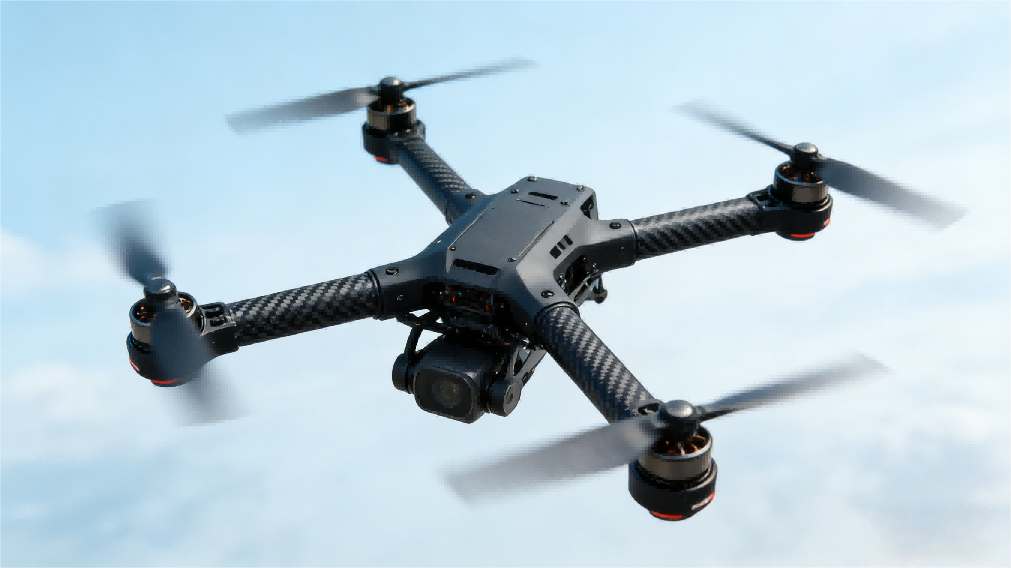
Widely used in drone arms, fuselage frames, gimbal supports, and other core load‑bearing parts. By reducing airframe weight, flight time is directly extended under the same battery capacity. The global carbon fiber UAV market was valued at ~USD 4.32 billion in 2025, growing at a CAGR of 8.40%. With the rapid development of the low‑altitude economy, demand for lightweight structural components in drones and eVTOL aircraft continues to rise.
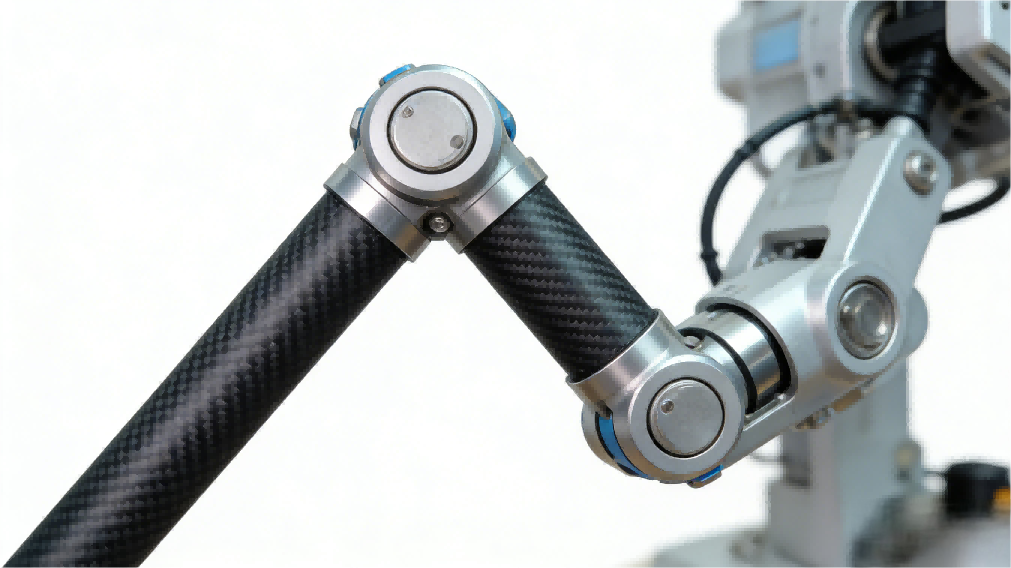
In robot arms and high‑speed automation equipment, carbon fiber tubes reduce the inertia of moving parts, enabling faster response, more precise positioning, and lower motor energy consumption. Research data shows that robot arms made of carbon fiber can be approximately 45% lighter and 28% stronger than traditional aluminum versions.
Carbon fiber offers excellent X‑ray translucency, high strength, light weight, and non‑magnetic properties, making it ideal for CT table tops, surgical robot arms, rehabilitation devices, and mobile supports.
Used in racing roll cages, drive shafts, chassis reinforcements, EV battery pack frames, etc. For electric vehicles, every 1 kg of weight reduction translates directly into extended range.
Carbon fiber telescopic tubes are the core raw material for cleaning poles. For photovoltaic panel cleaning, poles need sufficient rigidity when extended over long distances while remaining light enough for manual operation. Carbon fiber telescopic poles are a key procurement category for cleaning tool brands worldwide. The carbon fiber telescopic tube market was valued at ~USD 205.44 million in 2025 and is expected to reach USD 366.19 million by 2032, at a CAGR of 8.60%.
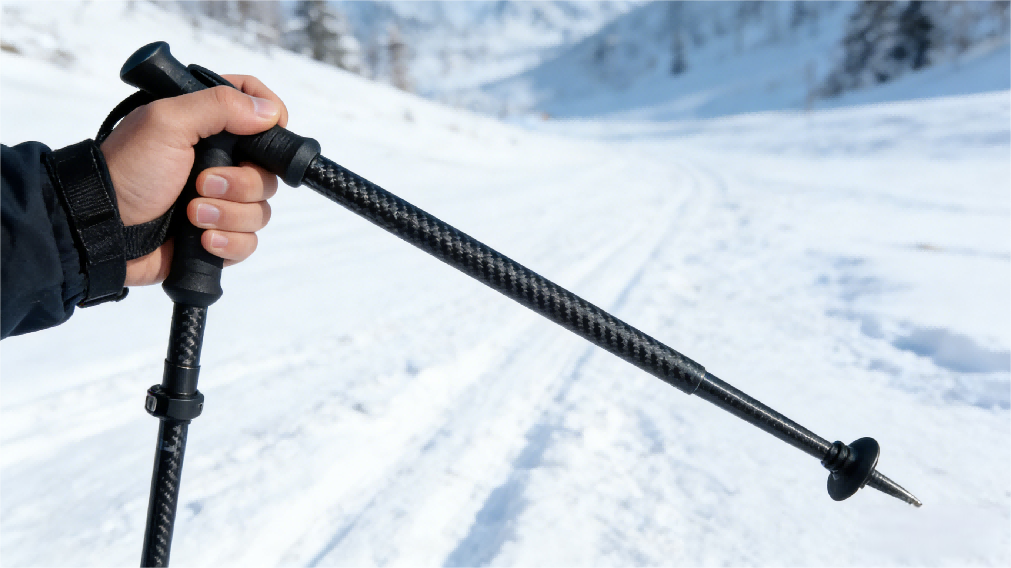
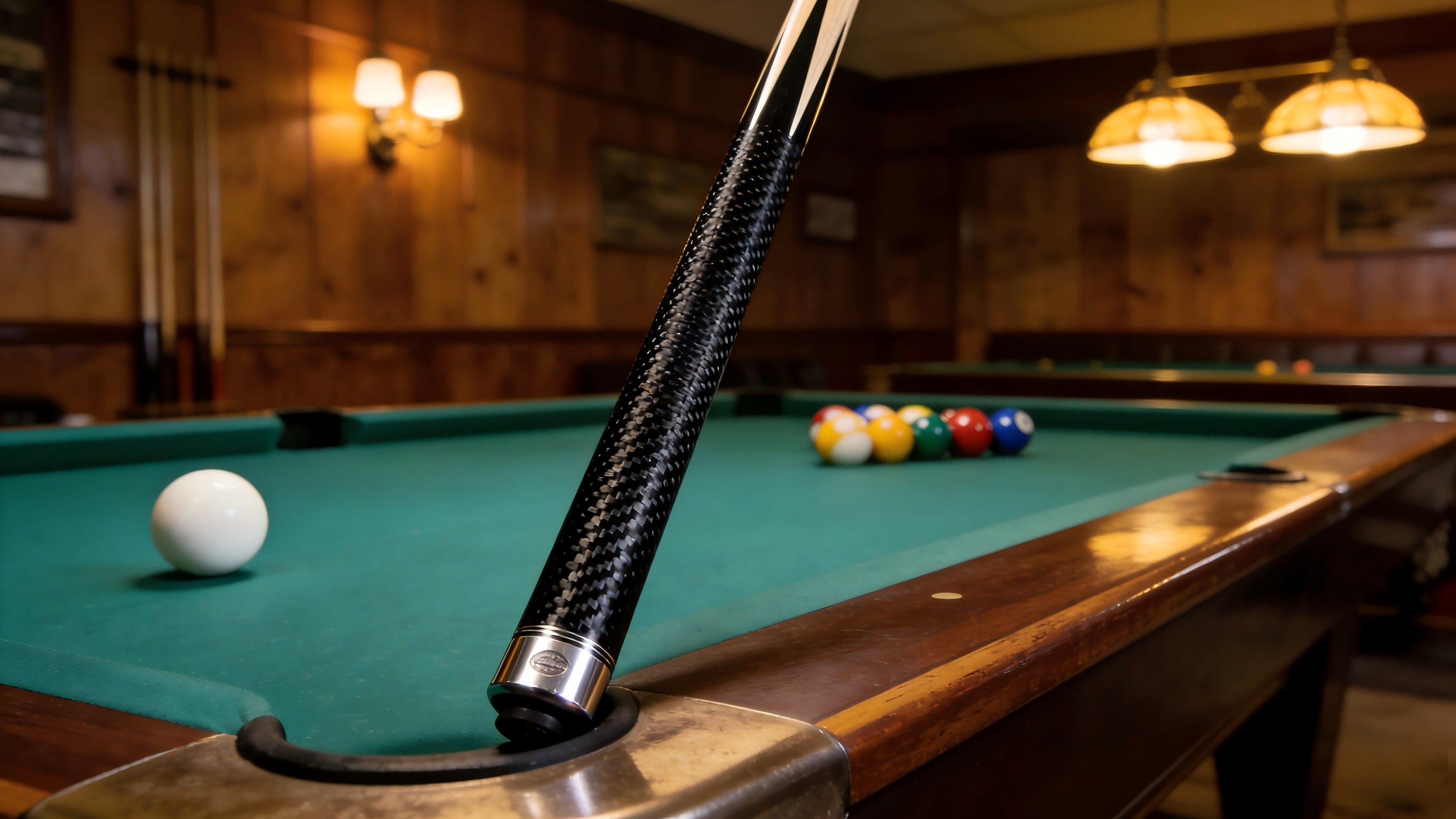
High‑end bicycle frames, fishing rods, tent poles, ski poles, arrow shafts – carbon fiber tubes significantly improve sports performance and user experience through lightweighting.
Carbon fiber tubes can replace metal rollers, reducing inertia at high speeds and increasing production speeds. Carbon fiber rollers in textile machinery can weigh as little as 0.1 kg, a significant reduction compared to traditional wooden rollers at ~1.2 kg.
Hezong New Material has built a complete in‑house production line from carbon fiber prepreg to finished products. Every carbon fiber tube – from fiber filament, resin formula, prepreg production, layup design, high‑temperature curing to CNC finishing – is under our quality control system. Vertical integration also provides flexible lead times and competitive costs.
Hezong New Material supports deep customization of carbon fiber tubes:
| Customization Dimension | Options |
Dimensions | Multiple OD (5–150 mm), WT (0.5–10 mm), length (up to 2500 mm) |
Layup Design | Combination of 0°, ±45°, 90° angles – tailored to customer load requirements |
Surface Finish | Matte/glossy; plain gloss, 3K/6K/12K woven finish, painting or labeling |
Fiber Grade | T300, T700, T800; 3K, 6K, 12K woven fabric all available |
Post‑machining | Precision cutting, chamfering, drilling, slotting; metal/plastic joint assembly |
Whether you are an OEM brand, industrial equipment manufacturer, or trading buyer, Hezong New Material offers one‑stop services from sample development to mass production. Small batches for validation, consistent quality for mass production, and full inspection before shipment to reduce incoming defect risks.
Hezong New Material has extensive experience exporting carbon fiber products, serving overseas customers in aerospace, industrial automation, new energy, and medical equipment industries. All products are manufactured under strict ISO quality management systems.
Key export information:
HS Code: 68151390.90 (other carbon fiber articles)
Export VAT rebate rate: 9%
Customs supervision: No special requirements – general non‑dangerous goods
Full B‑side support services include:
Free sample support (standard sizes)
One‑on‑one engineering technical consultation
Small‑batch trial production
Batch traceability for mass orders
Customized packaging solutions
Each batch of tubes is individually wrapped with cardboard + bubble film inner lining, and tube ends are protected with foam caps to prevent damage during transport. For bulk shipments, high‑strength strapping is used, plus protective cartons or wooden pallets. During shipping, protect from rain, moisture, direct sunlight, and store in a cool, dry environment. We support express, road freight, air freight, and sea freight. For bulk orders, palletized loading is available.
Q1: When comparing carbon fiber tubes vs. aluminum alloy tubes, what factors should B‑side purchasers focus on?
A: Consider the full life‑cycle cost. Carbon fiber tubes are 30‑40% lighter than aluminum, have tensile strength 5+ times higher, and are corrosion‑resistant, requiring no periodic maintenance. Although the initial cost is higher, over the long term carbon fiber delivers lower energy consumption, longer service life, and less maintenance – often resulting in a lower total cost of ownership.
Q2: How do I select the right tube OD and wall thickness for my drone based on wheelbase and takeoff weight?
A: General guidelines:
Wheelbase <250mm (FPV): OD 6–8 mm, WT 0.8–1.0 mm
Wheelbase ~500mm (aerial photography): OD 12–16 mm, WT 1.0–1.5 mm
Wheelbase >1m (industrial/agricultural): OD 20–30 mm, WT 1.5–2.5 mm
Final selection must also consider takeoff weight and power system. If you have design drawings or a damaged sample, you can send them to us for precise matching.
Q3: Are carbon fiber tubes electrically conductive? What precautions should be taken during assembly?
A: Yes. Carbon fiber is conductive, with resistivity ~1.5×10⁻³ Ω·cm. Do not use carbon fiber tubes as insulating structural components. Bare power wires must not touch the tube surface. When installing motor mounts or flight controllers, use plastic spacers or insulating tape between the tube and electronic devices. When cutting or sanding carbon fiber tubes, fine conductive dust is generated – wear an N95 mask and work in a ventilated area.
Q4: Are carbon fiber tubes impact‑resistant? Can they be repaired if cracked?
A: Carbon fiber is strong but relatively brittle. It can withstand very high tensile loads but is not as good at handling concentrated impact. In a severe crash, carbon fiber tubes may crack or split rather than bend. Once a crack or delamination appears, do not continue using the tube, as internal damage may cause sudden in‑flight failure. Carbon fiber tubes cannot be straightened like metal tubes; they must be replaced.
Q5: What post‑machining operations can be done on carbon fiber tubes?
A: We support precision straight/angle cutting, through‑hole/countersink drilling, embedded metal threaded inserts, external metal joint bonding, and more. All post‑machining is done on CNC equipment to ensure clean cuts, no delamination, and no fraying.
Q6: What is the minimum order quantity (MOQ)? Can I buy a single sample?
A: Standard stock sizes are available from a single piece. For non‑standard custom sizes, the MOQ is generally 10 pieces, depending on tooling and layup complexity. We recommend that new customers first purchase samples for testing and validation before placing bulk orders. Hezong New Material offers free sample support for standard sizes.
Q7: What information should I provide when placing a custom order?
A: For accurate quotation and production planning, please provide:
① OD and wall thickness (mm)
② Length (mm)
③ Quantity
④ Surface texture (twill/plain) and finish (glossy/matte)
⑤ Whether custom color is needed
⑥ Any specific layup angle requirements
⑦ Whether pre‑drilling or pre‑installed connectors are needed
For complex structural parts, please provide 3D drawings.
Hezong New Material Technology Co., Ltd. (HEZONG NEW MATERIAL TECHNOLOGY CO.,LTD.) is located at No. 26 Jiashan Road, Chucun Town, Huancui District, Weihai City, Shandong Province, China. We are a high‑tech enterprise integrating R&D, production, and sales of carbon fiber products. For many years, we have focused on the development and production of carbon fiber tubes, carbon fiber telescopic poles, carbon fiber cleaning poles, carbon fiber plates, and custom‑shaped parts, with full control from raw prepreg to finished products.
For quotations, samples, or technical inquiries, please contact us with the following information:
Outer Diameter (OD), Wall Thickness (WT), Length (L)
Quantity
Surface requirements (texture/finish/color)
Custom layup requirements (if any)
Standard sizes in stock; non‑standard sizes for OEM/ODM.
Tel/WhatsAPP: +86-157-6313-9515
Email: market@hezongmaterials.com
Website: www.hezongmaterials.com
Address: No. 26 Jiashan Road, Chucun Town, Huancui District, Weihai City, Shandong Province, China
Build stronger products with lighter materials. Hezong New Material looks forward to being your long‑term partner in carbon fiber structural components.


